E162: Holding Your Calling with Open Hands
What's up, alumni? Welcome to After IV, your podcast for navigating life after graduation. I'm your host and guide, Jon Steele. This week, we're on a bit of a break between our longer form series, but we're jumping into a conversation that I'm hoping will pop up multiple times throughout the year and even beyond that. Today, we're examining the experience of transition to life after graduation and navigating calling with an alumnus who was heavily involved in one of InterVarsity's many focus ministries while on campus.
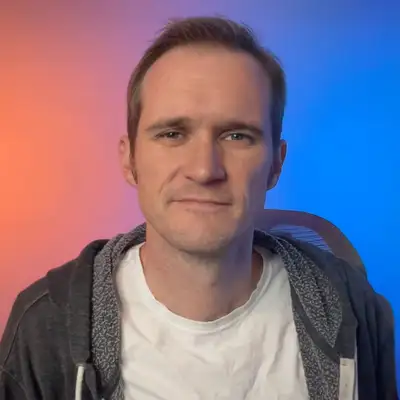
Jon:We're gonna hear from Philip Sheagog, an Arts InterVarsity alumnus who was involved with Christian fellowship and who is now a touring musician and co founding member of the electro acoustic duo, Archai. And Philip is going to tell us about his unique experience with transition and navigating calling as an artist and musician. Here's Philip, and this one's for you, alumni. Philip, welcome to the podcast.
Philip:Thanks so much, Jon. A real pleasure to be here.
Jon:Yes. I'm so glad that you're here. I'm looking forward to hearing your unique story about transition to life after graduation, hearing about some of the ways that god's at work in you and the unique ways that he has gifted you and called you. Before we get into some of those things, though, Philip, would you just help me get to know you, help our listeners and our viewers get to know you? Give us a little introduction here.
Philip:Sure. Do you want the whole spiel of who is Philip in ninety seconds?
Jon:Yeah. Yeah. Give us the the you know, I grew up I grew up reading this thing called Reader's Digest. Don't I know how many other people do, but it's, you know, very abbreviated. It's like, give us the Reader's Digest version of Philip.
Philip:Fantastic. So, it's funny. We'll we'll actually go back to my hometown for that because the only time I see Reader's Digest now is in my parents' bathroom.
Jon:Bathroom. And nice little snack. Did most of my reading.
Philip:I'm still making those. I I swear every time I go back home, it's like a different one is up on the counter. Yep. Anyway, so I grew up in Southern California in Anaheim. About twenty minutes away from Disneyland.
Philip:That's kind of our local landmark. And that was where I was born and raised up until I was 18 years old when I came out here to New York for school, but we'll get to that in a second. Yeah. But, yeah, in my childhood, I guess the most pertinent things for this conversation is that I have an amazing family who I love so, so dearly. We're still so close.
Philip:But just an amazing Christian home. Really solid, loving parents who were you know, they homeschooled my two older sisters and I. We just a a beautiful foundation in the church. And so that was kind of a pertinent part of my growing up years. And then the other one was that I started playing the cello when I was eight years old.
Philip:My both my parents are amateur musicians, and they wanted my siblings and I to have some sort of, you know, arts appreciation and background. There wasn't any particular intent or focus on going pro by any means. But they just wanted that to be part of our education. And so my middle sister had started playing the violin when she was five years old. And I, in turn, two years later, when I was five, I went to my mom and I said, you know, I've also had my stroke of artistic inspiration, and I know what I want to play.
Philip:I want to play the drums. And my mother, in her wisdom, said, no. And because who wants their five year old banging on the drums every day? It's it's a lot. But a couple of years later, it turned out that my sister's violin teacher had a colleague who lived locally who had an opening at her cello studio.
Philip:And so there we go. I'm eight years old, and mom comes into my room and says, hey. We're going to your first cello cello lesson. And so at at no will of my own, but that's how I started the cello, and then it eventually carried me. I eventually discovered the love for it through some pivotal moments in those growing up years that eventually led me out here to New York where I continued my studies at Juilliard for both my undergraduate and my master's degree.
Philip:So six years in one building. It's kind of intense. And then that's then taking me to now where I now play full time in a duo called Archive alongside a another ex Juilliard string player. My duo partner's name is Jonathan. He's a violinist.
Philip:And both of us, we were there at school studying, right, western classical music, right, the Bach, the Beethoven, the Mozart, the Mahler, the Haydn, all that. But both of us had curiosities and and ambitions beyond just that one lane of music. And so we both had our own journeys of discovering and kind of building up our skill sets to be able to navigate and speak other kinds of musical languages. Then we met through a jam session, which was like lightning in a bottle. That was five and a half years ago, and now we play we do a 100% of our of our livelihood, and our our artistry goes into this duo, which is kind of like if you took classical and you mashed it up with a rock band and EDM, DJ, and film music, and you kinda smush them all together, and that's kinda like what we do.
Philip:And that's and now we travel around the world internationally, national touring. We write our own music, produce for other artists, collaborate, do kind of like inspirational lectures, education, kind of the whole gamut of things. But Yeah. That is the current place where we find ourselves, that journey from California to New York and now to what I'm doing today.
Jon:That's really awesome. Wow. And and, you've got, like, a, like, a European tour coming up with Arkai. Right?
Philip:That's right. Yeah. We're in the I guess from the this point of recording, we have about the the two week ticker is going, and that's when we set off on this next leg of touring, which will be mostly Europe. There's some, dates in The US as well. But, yeah, it'll this has been kind of the hibernation season of mostly writing, arranging, producing, mixing, and then we're about to enter tour season where it's Wow.
Philip:Travel. So
Jon:That's awesome. Super excited for the work that Archive is doing. I hope that your upcoming tour at the time that we're recording this upcoming tour goes really well. Philip, my understanding is that you're also involved with Arts Intervarsity at Juilliard. Tell me a little bit about how you got connected there.
Philip:Yeah. Absolutely. So in the way that it was known while I was there, and I'll probably refer to it just habitually, for our conversation, it was called JCF, Juilliard Christian Fellowship, which was our intervarsity chapter. And, yeah, inter JCF was an integral part of my entire time at Juilliard. Like I mentioned earlier, growing up in a, like, Christian home in in Southern California and having a, what I would say looking back, like a robust a robust kind of training and discipleship in my early years.
Philip:I knew going into school that finding Christian community, finding a local church, all those things, that that was really important to me. I went in knowing that. I had no idea what that was gonna look like. I'm not even sure if I had had any communications with, like, the student affairs office or if I had done any poking around. But all I remember is that in during orientation week, right, I'm fresh off the minivan, literally speaking.
Philip:Just moved into across the country to New York City. And within those first few days where which are so formative, right, that you're trying to figure out your place, how you belong, who your friends are gonna be. It's really an opportunity for reinvention as a person moving in starting your school years. But during that orientation week, someone came knocking on my dorm room door, and it was a this is some intervarsity lingo. It was an NSO event, new student outreach.
Philip:For anyone who's involved with intervarsity, you know how big NSO is.
Jon:Yeah.
Philip:And so I found or I should say intervarsity found me. And so shortly after that, I found myself in a 5th Floor classroom with, you know, maybe a dozen or so other students, a couple of my new classmates, and then a couple of, like, older students. But so university found me, and that very quickly became one of my kind of primary communities, especially starting second year and beyond. First year, right, of course, you're a lot of things are changing. You're still figuring yourself out and figuring out your place.
Philip:JCF was was a was a already at that point kind of a pillar of my social life, but it was really from second year onward where there was a small group that I became a part of with three other guys. And, also, that was one huge part of it. And the other huge part was that all of the leadership from my freshman year were all second year graduate students and fourth year undergrad students. So, basically, all of the leadership graduated. And there was kind of a question, a natural question of who is going to step up?
Philip:And so our staff worker, Tim Craig, who is now assistant regional director, I believe, of New York, New Jersey area
Jon:Nice.
Philip:He put out the invitation, right, the call for leadership, that vision casting. And so starting my second year was really where some of the people who are now my closest friends and at that time were becoming my close friends when we all kind of took on that mantle of leadership. And so from second year onward, it became a, I would say, an even more pivotal part of my experience at school, my development, my formation. And that went all the way through my second year master's when I eventually left. Right?
Philip:And then there was a whole process of, what's the term, of succession, right, and building up new leaders and kind of passing the mantle to the next generation.
Jon:Yeah. Wow. I I love I love those scenarios where people just come in like, I know I know that I should be looking for something, but I don't know necessarily what it is or where I should go looking. And then all of a sudden, you know, it comes looking for us. Yeah.
Jon:And you've got somebody you've got somebody doing NSO, like one of the the pillars of what intervarsity does on campus, and and there you go. That's the moment. You're like, ah, this this is it. Man, Philip, so I know that we could talk at length, about experiences on campus, and we'll return to some some campus stuff in just a minute here. But I'm gonna actually fast forward us.
Jon:We've talked about just getting connected with intervarsity. I'm gonna fast forward you to graduation. So you're at Juilliard for six years, a lot of time in one building, you said. And then all of a sudden, it's time to transition to a new stage of life. And that's that's one of the topics that we really lean into on this on this podcast is is what does it look like to navigate the transition to life after graduation well?
Jon:How can we do that in a healthy way? It's gonna be hard no matter what, but how can we provide people with tools so that they can do it well? So so to help us get started with that with that conversation and what it looks like to engage with calling after graduation, Help help us know. Tell us the story or describe the feelings and experiences of going from Juilliard for six years to postgraduation life. And and in particular, is there anything that you that you feel like you uniquely experienced as a graduate of such an elite school or just being an artist, that made transition challenging or exciting or just particularly unique in some way?
Philip:Absolutely. This is a topic that is really close to my heart. It's something that, I think having now lived kind of the the season directly following this and being far enough away from graduation to see, right, a whole another generation of students going through that
Jon:Yeah.
Philip:It's something that I see. And in a lot of ways, my heart is really heavy around it because and some of this is specific to the field I'm in.
Jon:Yeah. Absolutely.
Philip:But some of it may resonate more broadly. But to give some context, the world of specifically classical music and conservatories specifically, right, institutions that specialize in that. It's I think the transition out can be very difficult because for for a number of reasons. But one of the one of the big reasons is that, by their very nature, they are hyper specialized. Right?
Philip:You're coming out for your entire time there, you've been studying essentially one kind of craft. It's like a trade school, one specific craft. Interesting. And then specifically for for us as classically trained musicians, the number of, I'll say, like, career paths that are presented to you or that you are kind of ushered into is extremely narrow. I would say probably that there's, like, three paths that are presented.
Philip:Don't have to go into the details of those, but it's it's essentially like you're funneled, and these are the pads of success. And, unfortunately, each of those pads are are, let's say that they are fields that are not increasing in their number of jobs available, and so you have this ever increasing pool of overqualified talent Wow. That's getting that's being, kind of funneled into these three increasingly tightening sieves. And so the natural result is that there's less and less people are actually able to find what they have been told their whole lives is success. And so what I see is a lot of a lot of difficulty, a lot of kind of yeah.
Philip:Like, it seems like it's it's hugely psychological. Right? This thing that has provided so much of my identity, my affirmation, my self value, how society values me, and now purely because of the raw numbers of the industry, most of the people, most of your, right, your friends, your peer group will not be in that field professionally. And so Wow. Anyway, so that there's a huge part there.
Philip:And so how that relates, back to my story is that I was kind of, you know, I was trying to be self conscious about all this and, like, aware of, okay. Well, how am I thinking very level headedly and about my future and my career and what is the path I wanna take. And at that point, I was, I would say, 5050% certain that I was gonna go back for a terminal degree because that's what you do when you don't know what you wanna do is go back for more school. But I I was kind of justifying it to myself that I've always loved academia, you know, the role of kind of, a PhD professorship. That could be interesting.
Philip:But a mentor of mine suggested take a year out, live in the real world, and if you still feel that strong conviction, then then you can think like, go back and think about it. And so I took his advice, and so I went out. And as you were describing, right, six years in the safety net, the bubble of higher education, and then you're out in the real world. And you're in this industry that is that is tough, that is oversaturated with overqualified people.
Jon:What what's interesting to me is to think about your unique experience because of your training and the professional world that you were stepping into. Like you said, very narrow, overly saturated with very talented and highly trained people and so highly competitive. And so, like, even so that's that's where I'd like to dig in just a little bit more is thinking about calling I would imagine that that that as an artist, as a musician, that there's some element of, like, this is not my identity, but it is a really important part of the way that god has created me. And and he's brought me through these unique, you know, elite school experiences and then brought me into this stage after graduation. And knowing that it was gonna be such a challenging space to step into, I mean, how did you, like, how did you wrestle with the idea of calling knowing that there's a chance that you might not get to engage with your skill set in the way that you anticipated?
Jon:Or or maybe even much bigger, more broadly than that is, like, how would you even articulate what your calling is as an artist? And, yeah, feel free to dig into those either direction you want to, but, like, let's just talk about calling in this highly competitive space.
Philip:Yeah. For sure. It's I think, for especially for people who are either just by their nature, like, high capacity individuals or, right, highly specialized, highly talented, however you wanna say it, there's a there's a a temptation there and a really easy slippery slope where the thing, the gifting that we've been given can so easily, right, take take an unrightful place in the hierarchy of our hearts. Right? When the gifting becomes more important than the gift giver or when we start to confuse or misorder or deceive ourselves into thinking, oh, right, even for the good Christians among us.
Philip:Right? Oh, I'm pursuing this thing at the highest level to give glory to god in asterisk. Right? Yeah. And it's so easy to make choices or make compromises or, again, kind of use use that all those tools of self deception or of justification.
Philip:Right? It's like our own internal press secretaries.
Jon:Yeah.
Philip:When when we have giftings like this. And and so then we're kind of so there's that part of it where it's like, well, how if I, you know, I have this gifting, how do I discern something that is a calling from the lord, right, that is a vocational calling versus something that maybe is, right, is a gifting, but maybe actually I'm being called not to pursue or I'm being called to give up or open my hands. Maybe the gift is still or maybe the Lord still wants to give you the gift but wants to change the posture of your heart towards that gift. Right? Maybe it's maybe it's I want to use you, but first you have to learn some lessons.
Philip:And so, we could I mean, this this is kind of some of the stuff that I've been wrestling with post school. Wow. Especially in the work that I've been doing with the duo because we're at the point now or and have been getting to the point where as there is increased visibility, right, as there is, what I'll call glory or accolades or fame, prestige. Right? All those things.
Philip:Oh, it feels like such a slippery slope and a and, like, you can see what is it in Proverbs. Right? The the deceitfulness of the heart and how easily the heart can twist things and trying to find that balance of, like and constantly, the the image that I've just had for, like, the last year plus has just been one of open hands of saying trying to say every day, like, this is a gift. Help me to keep my hands open. And then, Lord, as you will, if you want to give kind of blessing here and open doors and accelerate things, like, by all means, like, let's go, Jesus.
Philip:But if the if the if the thing that is best for me and for god's glory is actually to be to wait, Or maybe the door is open, and maybe you're actually not supposed to run through it just yet. Maybe you're actually supposed to be still and wait for the lord. Right? All all these things. That's that's been a huge kind of point of wrestling and, hopefully, growth for me.
Philip:And so let's see if we can pull it back to just the overall idea of calling.
Jon:Yeah.
Philip:Or or maybe I can come back to say that there was a quote I think attribute or that Tim I think it's Tim Keller that I heard Calvin actually say not too long ago. God being sovereign means that we may be gifted that or may be gifted that something, but there's no assurance that we will be great at the thing. It was something to be it's the extent of, right, if we are right. Or the way that I interpreted that in the moment was the world's value system or the what the world's narrative is, oh, if you're good at the thing, become better at the thing. Become the best at the thing.
Philip:Right? Don't stop climbing till you're at the very top or as high as you can get. And and kind of that that the only thing holding your yourself back is your own your own, like, work ethic and your own how much will you sacrifice to this thing. Right? The more that you sacrifice, the higher you'll get.
Philip:And then I don't know what the reward's supposed to be, but, but what I interpreted that Tim Keller quote to mean was that right? Because, actually, god is sovereign, and if he is sovereign and his calling upon our lives kind of to what we were describing earlier, you might have a gifting. But he might say, actually, in my economy, you I I brought you this gift to get you here, but maybe the point isn't for you to climb as high as you can. May maybe for some people it is. Maybe, right, he does want to exalt some people to the highest of positions and to God's glory.
Philip:But but that's not an assurance. That's not something that we can rest on and say, oh, great. Because I'm a Christian and because God works all things together for the good, that means God will work all things together for my career success. And I think those are two very different things and especially, again, in fields that are hierarchical that where where people are and for people who are highly skilled or highly gifted, it it can be that can be a hard thing to let go of or to parse through or to write to let to divide between soul and spirit. Right?
Philip:You know, as the word does. Yeah. So to bring that back to calling, I think that what I have seen in my life and what I'm attempting to keep with open hands is that I think I've seen the lord open doors in places that I wasn't expecting in ways that have allowed the fullness of who he's created me to be to intersect in ways that are that were totally unpredictable, but in ways that have created opportunities for the blessing of others. The Lord's been opening these doors, and the what we've been able to offer the world, I think, and I pray has been glorifying to him and that the spirit is moving even right in these secular secular ways or secular rooms and audiences. Right?
Philip:It's not sacred music. We're not playing in churches, but I believe and I trust that the spirit is working through that and that there are things yet to happen that the spirit will work through this. And I'm I'm praying, right, that as the as the opportunities increase as much as he wills, right, that the posture of my heart will will remain one of open. Right? That the the lessons learned in the wilderness, so to speak, will continue to be lessons that have formed my heart even when you're at, right, whatever whatever peak it may be.
Philip:Right? It's like maybe maybe it's a high peak. Maybe it's a low peak. Maybe, right, this gets to a certain point, and then god says, alright. That was to get you here, and now I need you here.
Philip:Yeah. But that's the that's the the journey of faith, I guess.
Jon:Yes. Yeah. Wow. Philip, you touch on so many really interesting things here when it comes to our calling and our createdness, what it what it means to be, like, to be to belong to the lord, that we are his. And, you know, if there are if there are things that he has gifted to us that you know, abilities that we have, it's really his call as far as what the audience for those abilities are.
Jon:And we live in an era and in a culture that says, you can become the most famous and the best at, fill in the blank thing, that you are most passionate about. And that's you know, in and of itself, I don't know if that's necessarily a bad thing. But when we invert who that gift belongs to, like, that's where it becomes a very dangerous and and unhealthy thing that, you know, if God has has gifted me with something and he wants that to forever be a private relationship between me and him, that that this ability is something that I use here in my basement, and I give it to the lord, and that's like, he and I are the only ones that experience it, and that's the way that he wants it to be, then that is the lord getting out of that gift what he intended. But if he wants a gift to be used on some big platform, then just the same. Like, if if we follow the leadership of the Lord and he puts us into some space where we speak to a huge group of people or use our gift in front of a huge group of people, it's still doing with the gift what God intended because it was his gift to give in the first place.
Jon:And what does it look like for us to have our hands open and to just be obedient to whatever version of that God calls us into and to do our very best no matter what the setting is.
Philip:Couldn't have said it better. Yeah.
Jon:I so, Philip, as you as you think about I I mean, okay. Once again, there's so many there's so many different things that we could continue to lean in here. But but I would like to know, being an InterVarsity alum, being a JCF alum and your experience at Juilliard, like, are there threads that you look back on of your time with InterVarsity that helped prepare you for doing it imperfectly, certainly, and the journey that you've gone along as far as what it looks like to engage with your calling with the lord and the the path and the pace that he has for you. But are there things that that that that JCF helped prepare you for in this season of engaging with calling?
Philip:Absolutely. I think the biggest thing and the biggest the biggest gift that I was given was the gift of vision. My staff worker, Tim Craig, who, again, is now assistant regional director, that was that was his gift to the entire chapter was focusing on vision, like lifting our eyes, expanding our our sense of what was possible, right, what the lord envisioned for our campus, Right? For the Lord's heart, for our fellow students, for right? And then even broader, right, as we started attending the regional conferences.
Philip:Right? The, Basilea, the big events, and then a couple of us went to Urbana Urbana Hacine and Urbana Eighteen. Wow. But opening our eyes in that sense, that is something that that has stayed with me in both the spiritual context of that, but also in the larger context of vision for, vision for ourselves, for our our lives. And it's that's actually the, I would say, the driving and foundational motivator behind what I do with my duo.
Philip:For me, it's not really ultimately about playing the cello. It's not even ultimately about making awesome genre defiring, mind blowing music. That's awesome, and it's, like, such a blessing and a privilege to be able to do that. But for me, what it's really about is about presenting to people a larger vision than they had before. Right?
Philip:When you see something, when you experience something that doesn't fit into your categories that you previously had, right, in our case, I thought I knew what a violin and cello could be, and now my categories have been exploded. Right? That increases our vision for what's possible. And right? Like, tiny little incisions.
Philip:Right? Over time, I think what that does is that shapes our our worldview. It changes our beliefs about what the world is fundamentally. Right? The the future can be different.
Philip:The future or my what I can be, the person I can be is different, is larger, is more beautiful maybe than what I currently believe. Right? That's the ethos behind it. And then pulling that into the context of our faith and our walk with the Lord, applying that same vision, like what is the Lord's vision for my life? What could my life look like if I really had open hands?
Philip:If I truly had all these parts of my life surrendered, what could that look like? What could a vessel used by the Lord look like? Now what would that look like in a community? What would that look like in a home, in a church, in a city? Right?
Philip:If we're getting we're getting some vision fire, but this is also, the church I'm currently at has been has been fanning some of this flame as well.
Jon:But Nice.
Philip:But the fact that vision is like, to use that analogy, is like a fire. It's like a an ember, a spark. And if you breathe on it, right, it can completely transform an individual's life, but also a community, a by the region, a country, the world. Right? I mean, we can get bigger and bigger, but it's but I think it starts with that vision.
Philip:Spark vision, tend to vision, reignite vision when it when it's when it's burning low, and that's something that I'm forever grateful for. I think those are those are the biggest gifts that I'm just so thankful for my time with InterVarsity.
Jon:Yeah. Oh, I I love that. I I really love the idea of just, like, dreaming with god. Like, what could be possible if I lived with my hands opened and my life submitted to you? What what could be possible?
Jon:As a fellow alum, like, we wanna be able to support you in what you're doing. Help us, help us know how we can keep engaging with the work that you're doing with Arkai.
Philip:For sure. So you can find us on all platforms, right, or on, music is streaming on all streaming platforms. Our videos are up on YouTube. You can follow us on Instagram, all that good stuff. Arkai is spelled a r k a I.
Philip:And, yeah, this this year, particularly, I'm super excited for what is to come, what's coming out. And as we've been talking about, I hope that it's not only some, like, amazing mind shattering music, but also my hope is that in every every creative product that I am a part of, that the spirit is speaking through that. And so I hope that it's that as people are able to listen to this music, that they're able to feel feel that it's coming from that place. It's a you know, we might even call it redemptive art. Right?
Philip:It comes from that place of god's goodness.
Jon:That's awesome, man. Philip, thank you so much for the work that you're doing, leaning in with god in these spaces and, yes, taking taking him with you. Even you know, as you said, you're not playing church music, but that this this can be redemptive work that you were doing in the midst of that and that God can communicate his power and his love and his goodness through through the art that Arkai is making through you and your influence and the people around you. And so I'm I'm I'm I'm grateful for the work that you're doing, the ways that you are following Jesus, being open to his leading and and the ways that he wants to use the gifts that he's given to you. And and I I also hope that you are going to see many of those things coming through in this in this current season.
Jon:Thanks a lot as you're preparing for a big European tour. Thanks a lot for taking some time to hang out with us here. This has been super fun to get to to get to hear some of your story and to get to to talk about some of these things with you, Philip.
Philip:Yeah. Thank you, Jon. It's a real, real pleasure, a real honor to be here. So thank you.
Jon:Arts InterVarsity alum or not, there is so much that we can glean from Philip's wise words today. As you continue to discern your calling and the direction of your life after graduation, what does it look like to hold your future with open hands and to say, God, this belongs to you. How do you want me to use it? And then to wait. And as you sense the Lord's leading, lean in, all the while holding that sense of direction with an open hand knowing that where God leads you may just be for a season, however long or short, before the directions get updated.
Jon:Whether God leads you into a space of prominence or anonymity, know that God is at work in his own ways and in his own timing and that he will care for you in the midst of it. What deep, rich experiences might be waiting for you as you hold that calling with Open Hands alumni? Philip, thank you so much for joining us for this episode. Thank you for the unique perspective that you bring with you, and blessings on your ongoing collaboration and partnership with Jonathan through Archive. Alumni, be sure to come back next week for a very unique episode.
Jon:Let me just say, if you haven't checked out our YouTube channel yet, next week would be the time to do it. That episode will be best experienced with video. Just saying. Until then, consider sharing this episode with someone who needs to hear it, and I will see you in the After IV, alumni. Thanks for listening to After IV.
Jon:This podcast is brought to you by the InterVarsity alumni relations team, hosted and produced by Jon Steele. Production assistance by Mike Santerra, edited by Caleb Leppert, and our After IV theme music was written and performed by Jon Steele.
Creators and Guests